
Understanding the Cathedral of St Lawrence in Trogir
The Cathedral of St Lawrence in Trogir stands on the main square, where its portal and bell tower introduce a building made over several centuries. Construction began around 1200 and continued into the early seventeenth century. Its largely Romanesque body, Gothic vault and later additions make it rewarding to look at individual parts rather than assign the entire cathedral to one period.
Begin by deciding what draws you here: sculpture at the western entrance, the Chapel of St John, or the building’s changing architecture. Each gives the visit a different focus. The portal deserves attention as a work of sculpture, while the chapel invites a closer look at Renaissance art. Leave room in your city plans for both observation and interpretation instead of treating the cathedral simply as a landmark to photograph.
The surrounding square is part of the wider Old Town visit. That guide connects the cathedral with the loggia, town hall and streets; this page concentrates on the building itself. For the relationship between its construction and the city’s longer development, continue with Trogir’s history.
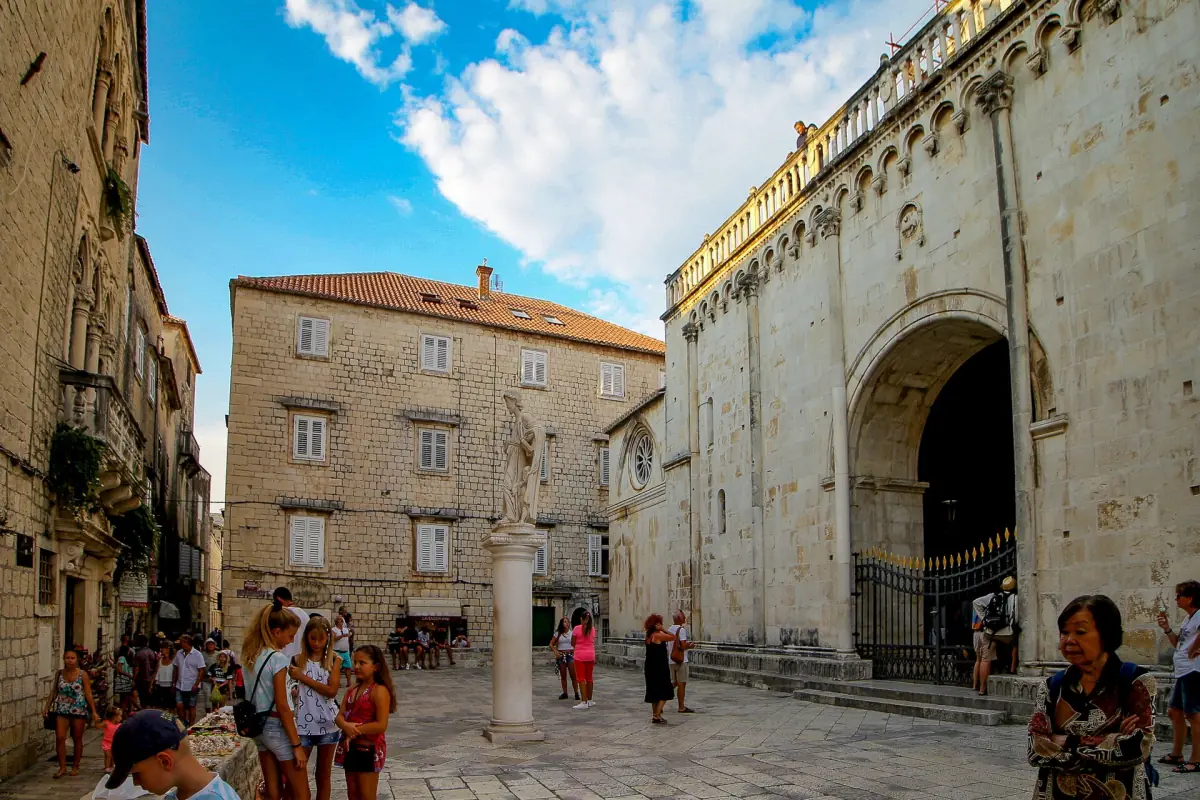
Radovan’s portal and its sculpture
Radovan’s portal was completed in 1240. On the western entrance, Adam and Eve stand on lions, while the Nativity appears in the lunette. These are useful starting points for looking: identify the figures, then consider how separate scenes are brought together around an entrance. The portal provides a more specific introduction to the cathedral than a general view of its tower.
Building signs, personal master marks, scratched prayers and game boards are also part of the architectural story associated with the cathedral and St John the Baptist. Think of these as another scale of observation alongside the large sculptural composition. They draw attention to people who worked on or used the buildings, rather than only to the finished monument. Give the details time without expecting every mark to explain itself.
A guided city walk
The private option includes cathedral and fortress tickets.
Hand-picked tours, booked through GetYourGuide. Prices are indicative starting prices in euros (as of October 2026). Tap a tour for live availability and the current price in your currency.
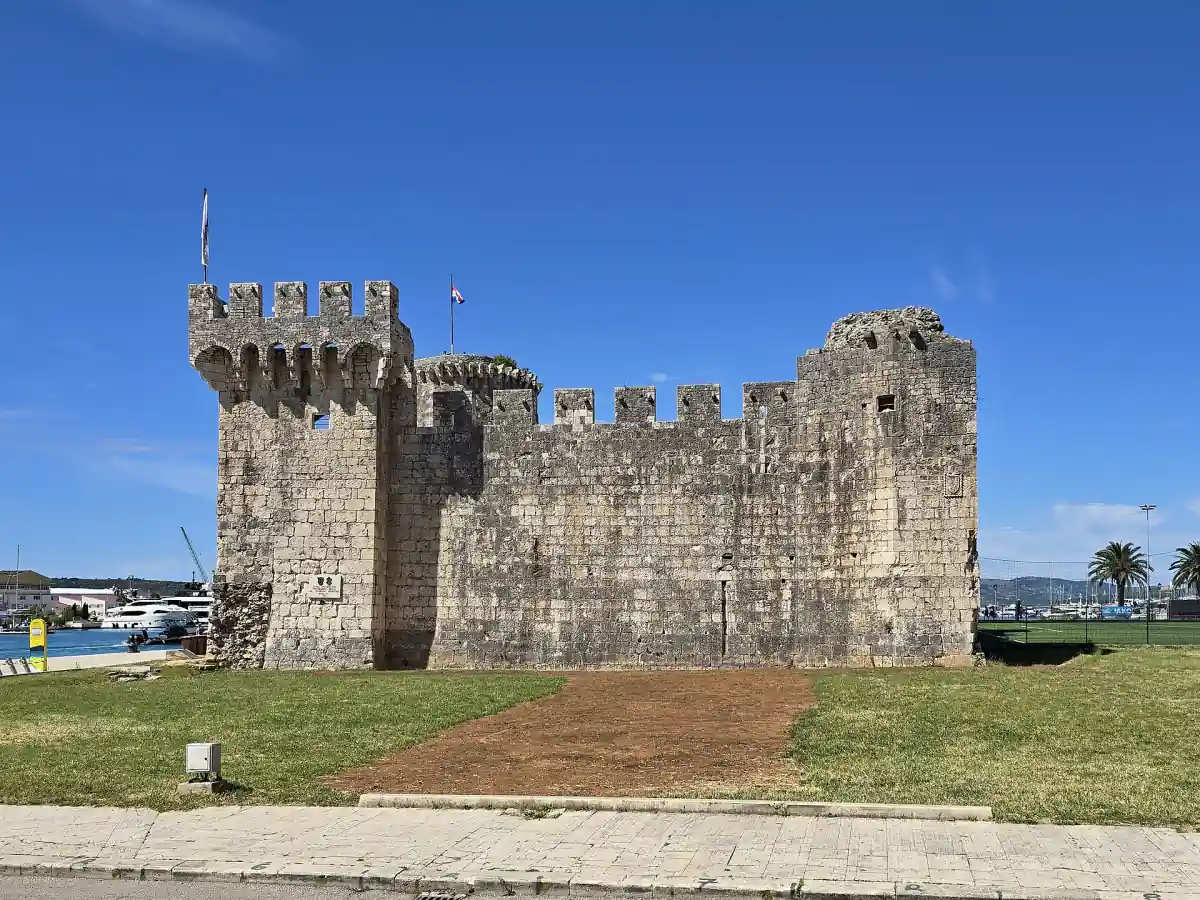
A guided cathedral visit within the city
The private walking option includes admission to St Lawrence and Kamerlengo; the small-group option offers a different ticket arrangement. Both include a licensed local guide.
The Chapel of St John and changing styles
The fifteenth-century Chapel of St John was designed by Nikola Firentinac, with contributions from Andrija Aleši and Ivan Duknović. It contains the tomb of John of Trogir, the city’s patron. Keep the dedication of the cathedral to St Lawrence separate from this chapel’s dedication to St John: the names refer to different elements of the same visit.
The cathedral’s Gothic vault also belongs to the fifteenth century. Reading the Romanesque body and later vault together is a useful way to understand its long construction history. A building can retain an earlier structural character while acquiring work in another style. The chapel adds a further artistic focus, so there is more to the interior than a continuation of the portal’s sculpture.
The bell tower as a sequence of building phases
Work on the bell tower began in the late fourteenth century. Its storeys have different stylistic forms, and the third storey was completed in 1605. That date belongs to this part of the tower; it should not be read as a single completion date for every element of the cathedral. Look at the tower as a visible record of changes across time.
If an ascent is central to your plans, check the tower’s access arrangements for your visit date. You can still organise your interest in the cathedral around the portal, chapel and building history. For a contrasting monument, the Kamerlengo Fortress guide examines military architecture beside the waterfront.
Admission and opening hours
The cathedral complex’s published schedule valid from 17 February 2025 listed cathedral admission at 6 EUR, the baptistery at 2 EUR and the sacred art collection at 3 EUR. Its blue combination ticket for the cathedral and baptistery cost 7 EUR. These are dated planning references from that schedule, rather than a price quotation for a visit in 2026.
The same February 2025 schedule gave ticket-office hours of 09:00 to 14:00 and visiting starts at 10:00, 12:00 and 14:00. For an upcoming visit, use the arrangements displayed for your date. The guided walk offered here lasts an hour and a half and starts at Gradska vrata 6. Its private option includes cathedral and Kamerlengo admission; compare the small-group option on its own terms when choosing between formats.
Questions about the cathedral
When was Radovan’s portal completed?
In 1240. Adam and Eve on lions and the Nativity in the lunette are among its subjects.
Does the guided walk include entry?
Cathedral and Kamerlengo tickets are included specifically in the private option of the featured walk. Choose that option when admission is part of your plan.
What does the date 1605 refer to?
It marks completion of the bell tower’s third storey, within a much longer cathedral building history.