
Kamerlengo Fortress and its waterfront setting
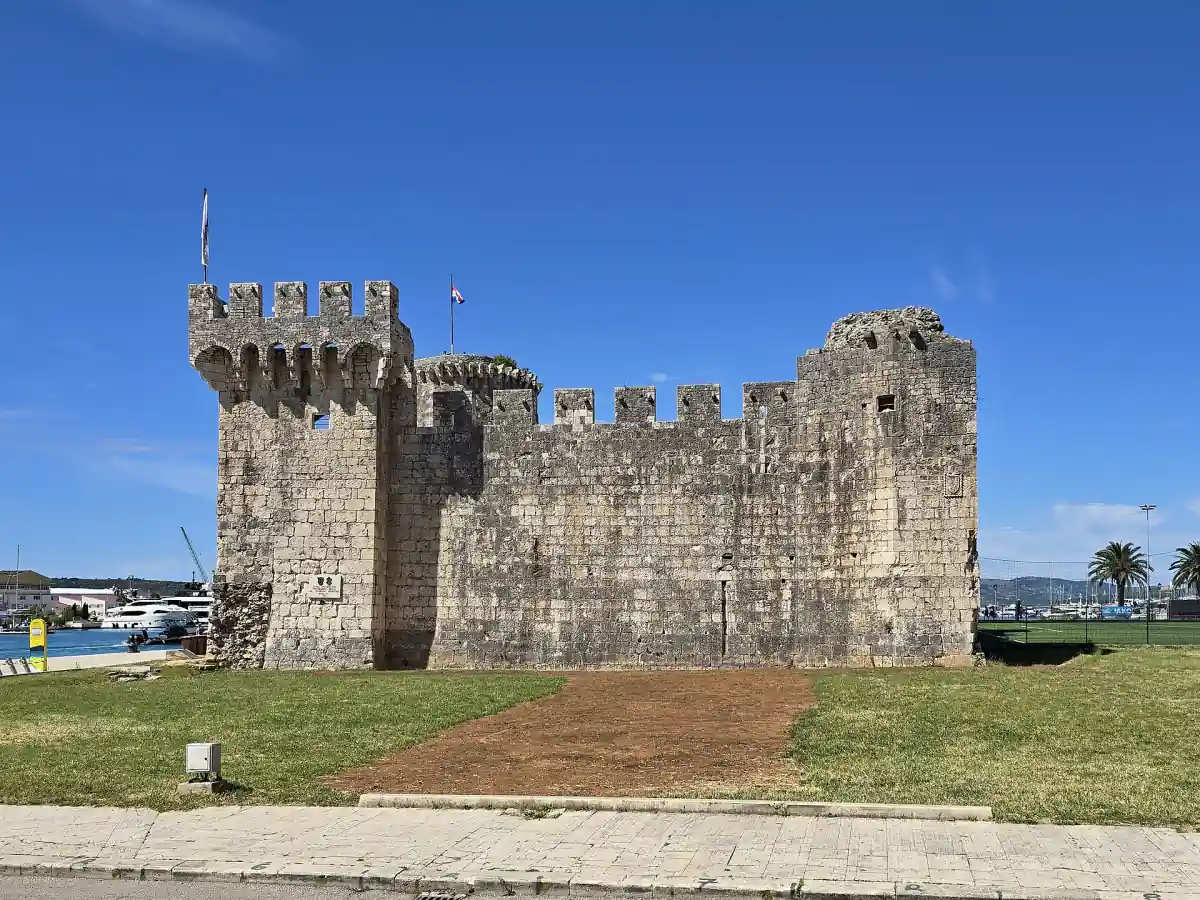
Kamerlengo Fortress is a fifteenth-century monument beside Trogir’s Riva, connected with the city’s long period of Venetian rule. Its walls and towers offer a different architectural focus from the churches and civic buildings around the main square. Consider it both as a building to look at from the waterfront and as a possible interior visit, with a separate decision about admission.
The distinction matters when organising a day in the historic city. A walking tour may include Kamerlengo among its sights, while a boat outing may use the fortress as a meeting point. Those are different uses of the same landmark. For a city walk focused on the exterior, allow time to look at the walls in their waterfront setting; for an interior visit, fit the current entrance arrangements into your plans.
The Old Town guide links Kamerlengo with the square, churches and lanes. Keep that wider route separate from a closer look at this monument. If the contrast between religious and military architecture interests you, read about the Cathedral of St Lawrence before deciding how to divide your attention between them.
Venetian history within a much older city
Kamerlengo belongs to the fifteenth century and to the Venetian chapter of Trogir’s history. The city itself is much older: ancient Tragurion began as a Greek trading settlement in the third century BC. Reading the fortress in that longer context prevents a single prominent building from becoming the explanation for the entire town. Venice is an important influence, alongside others that shaped the historic city.
For a useful architectural comparison, think about the different purposes of the monuments. The cathedral centres attention on a religious building and its sculpture; Kamerlengo introduces fortification into the cityscape. You can appreciate that contrast without attaching a precise siege story to every tower. The history page sets out the broader chronology, including the ancient street pattern and the later recognition of the historic city as World Heritage.
A walk past Kamerlengo
This guided Old Town walk includes an exterior view of the fortress.
Hand-picked tours, booked through GetYourGuide. Prices are indicative starting prices in euros (as of October 2026). Tap a tour for live availability and the current price in your currency.
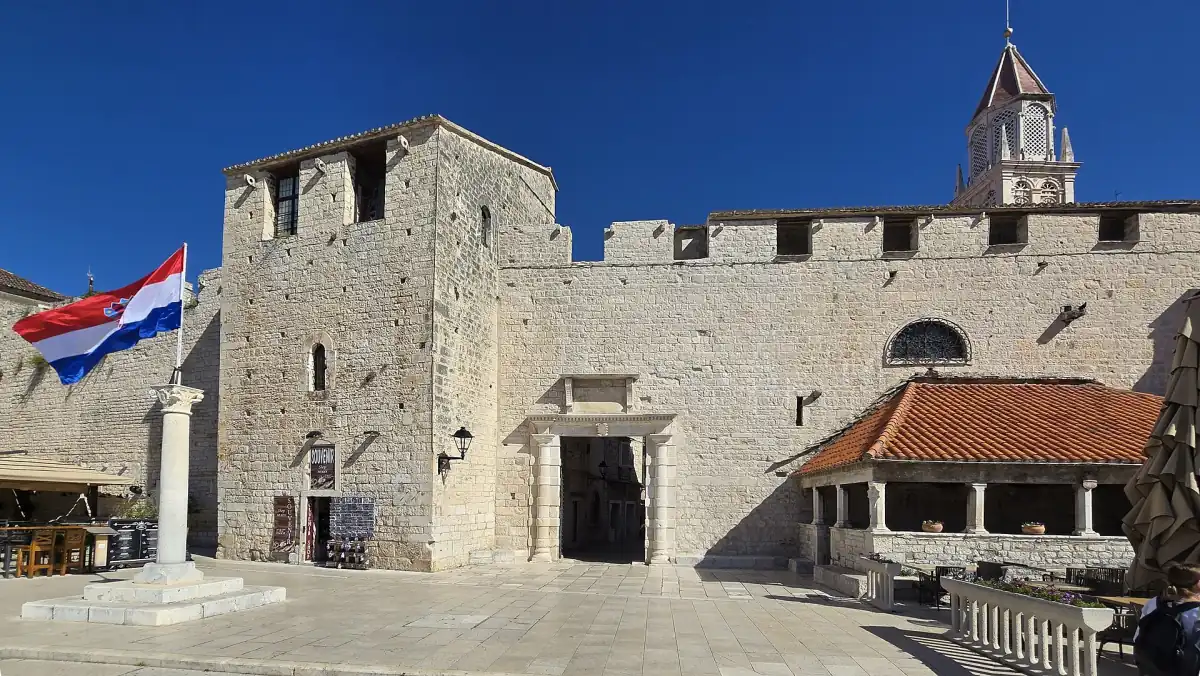
See Kamerlengo on an Old Town walk
An hour-and-a-half walk from the northern gate includes a licensed local guide and Kamerlengo among the sights. Plan this experience around an exterior view of the fortress.
Deciding between an exterior view and entering
Choose the exterior as your focus if your main interest is the fortress’s position beside the Riva or its relationship with the rest of the historic city. The featured walk starts at the northern Old Town gate and includes a licensed local guide. Its inclusion is the guided city walk; organise any separate visit inside the fortress around the admission arrangements for your date.
For a day combining city architecture and time on the water, use the fortress as an orientation point rather than treating every stop there as the same activity. Check the meeting instructions of your chosen boat trip and keep its departure time separate from your fortress plans. This gives each part of the day room, whether you choose a closer visit to Kamerlengo or an exterior stop before heading elsewhere.
Seasonal opening hours: the published 2025 version
The official seasonal schedule in the PDF uploaded in 2025 listed daily hours of 10:00 to 18:00 in April, 09:00 to 20:00 in May, and 09:00 to 22:00 from June to August. It then listed 09:00 to 20:00 in September and 10:00 to 18:00 in October and November. These times describe that published version, so use the current entrance information when organising a visit.
For a winter date, check the specific day’s arrangements before building the day around an interior visit. Keep an alternative city plan that gives the square, streets and waterfront their own attention. A historical seasonal schedule is useful for understanding how visiting patterns have been organised, but the hours relevant to your own date are the ones to use for a timed appointment or onward activity.
Admission and the summer museum combination
For individual admission, use the price displayed for your visit and its applicable category. A dated combination offers a separate example: on 29 July 2026, the city announced a summer pilot ticket for Kamerlengo and the City Museum. It cost 9 EUR for adults and 5 EUR for children and students, and was sold at the fortress entrance. This was a summer offer, so check whether a combination is available for your own date.
That museum combination joined the fortress with a museum visit. If your priority is the cathedral instead, consider its admission arrangements separately. Thinking in terms of the places you want to enter is more useful than choosing a ticket simply because it is described as combined. It also helps you decide whether a city introduction with a guide or a closer visit to an individual building should be the focus of the day.
Questions about Kamerlengo
When was Kamerlengo built?
It belongs to the fifteenth century and is associated with Venetian rule in Trogir.
What does the featured city walk include?
A licensed local guide and an hour-and-a-half Old Town walk from the northern gate. Treat Kamerlengo as an exterior sightseeing stop on this walk.
What was the summer combination ticket?
The pilot announced on 29 July 2026 joined Kamerlengo and the City Museum, at 9 EUR for adults or 5 EUR for children and students.