
Reading Trogir history through the city
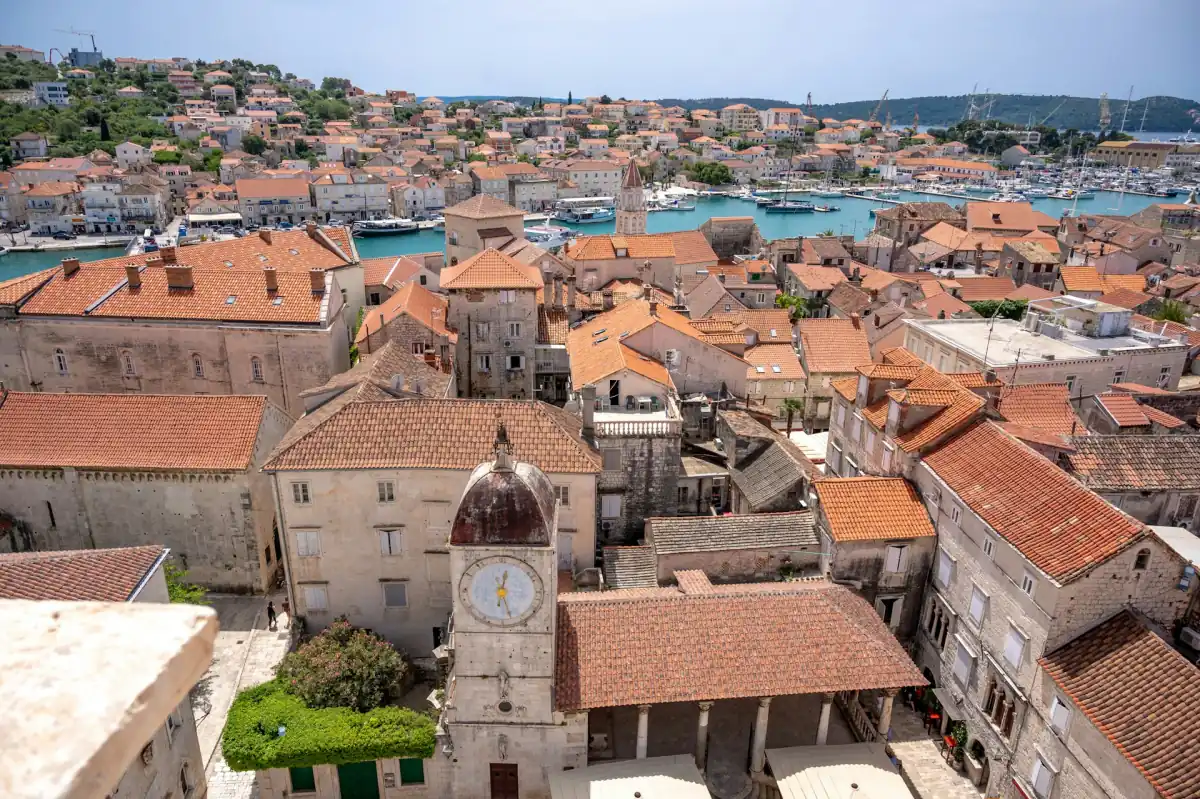
Trogir history begins with ancient Tragurion, founded as a Greek trading settlement on an island in the third century BC. The story is one of continued occupation and change: the Hellenistic street pattern remains recognisable, while buildings from later periods give the historic city much of its visible character. The streets and the architecture therefore tell related stories at different scales.
It helps to separate the age of the urban pattern from the age of an individual building. A medieval church in an ancient street network brings more than one period into view. That continuity makes Trogir interesting beyond a collection of separate monuments. Instead of looking for one moment when the city acquired its present identity, notice how later work developed within a place already shaped by earlier inhabitants.
This page follows those layers chronologically. For a practical route connecting the main square, churches and waterfront, use the Old Town walking guide. The distinction lets you choose between understanding the city’s development and organising the sequence of a visit, without asking every historic building to serve as a complete account of Trogir.
From the Greek settlement to a city of many influences
The Greek trading settlement provides the starting point, but Trogir’s cultural history also includes Roman, Byzantine, Hungarian and Venetian influences. Its architecture encompasses Romanesque churches alongside Gothic, Renaissance and Baroque buildings. Those categories describe different contributions to the historic city, rather than interchangeable names for a single style. A Venetian fortress is one important element within that wider development.
The foundation of the Monastery of St Nicholas in 1064 offers a later chronological marker. It places a religious institution within the city’s continuing history long after its ancient beginnings. Read such dates as anchors for particular institutions or works. They help explain the passage of time without requiring every building visible today to have originated in the same period or under the same cultural influence.
Explore the historic city
A local licensed guide accompanies this walk through Trogir.
Hand-picked tours, booked through Viator. Prices are indicative starting prices in euros (as of October 2026). Tap a tour for live availability and the current price in your currency.
Explore the historic city with a local guide
A 90-minute city walk includes a licensed guide and begins at the main gates beside the small bridge. It offers an introduction to Trogir through the city itself.
The cathedral as a record of artistic change
Construction of the Cathedral of St Lawrence began around 1200. Radovan’s western portal was completed in 1240, giving a precise date to a major sculptural work within the longer building history. Its subjects include Adam and Eve on lions and the Nativity in the lunette. The portal is a useful example of how a specific work can make a broad period more tangible.
The cathedral’s Gothic vault belongs to the fifteenth century, as does the Chapel of St John. Nikola Firentinac designed the chapel, with contributions from Andrija Aleši and Ivan Duknović. These later works changed the artistic experience of a predominantly Romanesque building. For the relationship between portal, chapel and interior, continue with the cathedral guide, rather than treating its construction history as a single date.
Kamerlengo and the changing skyline
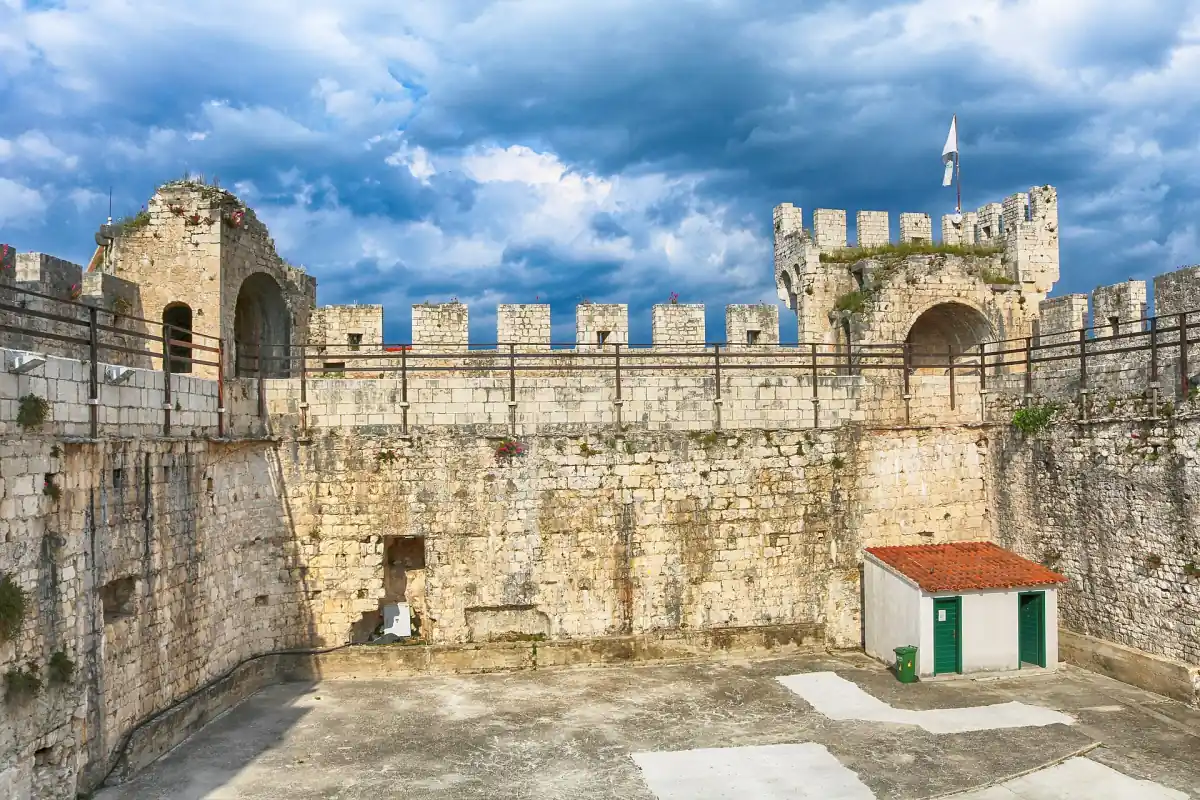
The fifteenth century also brought Kamerlengo into the city’s architectural story. Associated with Venetian rule, the fortress represents a different building purpose from the cathedral’s chapel and vault. Placing these works beside one another in time is useful: the same broad century can contain military architecture and religious art, each contributing a distinct element to the surviving city.
Work on the cathedral’s bell tower had begun in the late fourteenth century; its third storey was completed in 1605. Different styles appear across the storeys. That extended sequence reinforces the importance of additions rather than a single finished image of Trogir. The Kamerlengo guide focuses on the fortress itself, including the distinction between viewing its exterior and planning an interior visit.
Master marks, modern art and UNESCO
Personal master marks, building signs, scratched prayers and game boards associated with the cathedral and St John the Baptist bring people into the architectural history. Their value as a way of looking is different from a dated masterpiece: they invite attention to the work and use of buildings. Think about both scales, from the small trace to a major artwork, when considering the idea of a city of masters.
The city’s artistic chronology extends beyond the medieval and Renaissance periods. Ivan Meštrović’s relief of Petar Berislavić in the loggia was completed in 1938. In 1997, the Historic City of Trogir entered the UNESCO World Heritage List. That recognition concerns the historic city and its accumulated character. It is a useful concluding point for understanding why the street pattern, buildings and artistic details matter together, while the city’s continuing cultural life remains a separate story.
Questions about Trogir’s past
When did Trogir begin?
Ancient Tragurion developed as a Greek trading settlement in the third century BC.
Is the city entirely Venetian?
Its cultural influences include Greek, Roman, Byzantine, Hungarian and Venetian contributions, with buildings in several architectural styles.
When did the historic city become World Heritage?
UNESCO inscribed the Historic City of Trogir in 1997. The designation concerns the historic city.